
What a Technician Usually Finds on These Calls
By late October, the calls start sounding the same. A garage door that worked fine all summer suddenly groans going up, reverses halfway down, or won't budge at all once the temperature drops overnight. Most of the time it's not one dramatic failure but a handful of small things that got ignored through the humid summer months and are now colliding with the first real cold snap: a spring that was already weak, hardened grease in the tracks, a bottom seal that cracked and let in a draft nobody noticed until the garage started feeling like an icebox. None of it is complicated to prevent, but it does need to happen before the first hard freeze, not after.
Cold Does More to a Garage Door Than People Expect
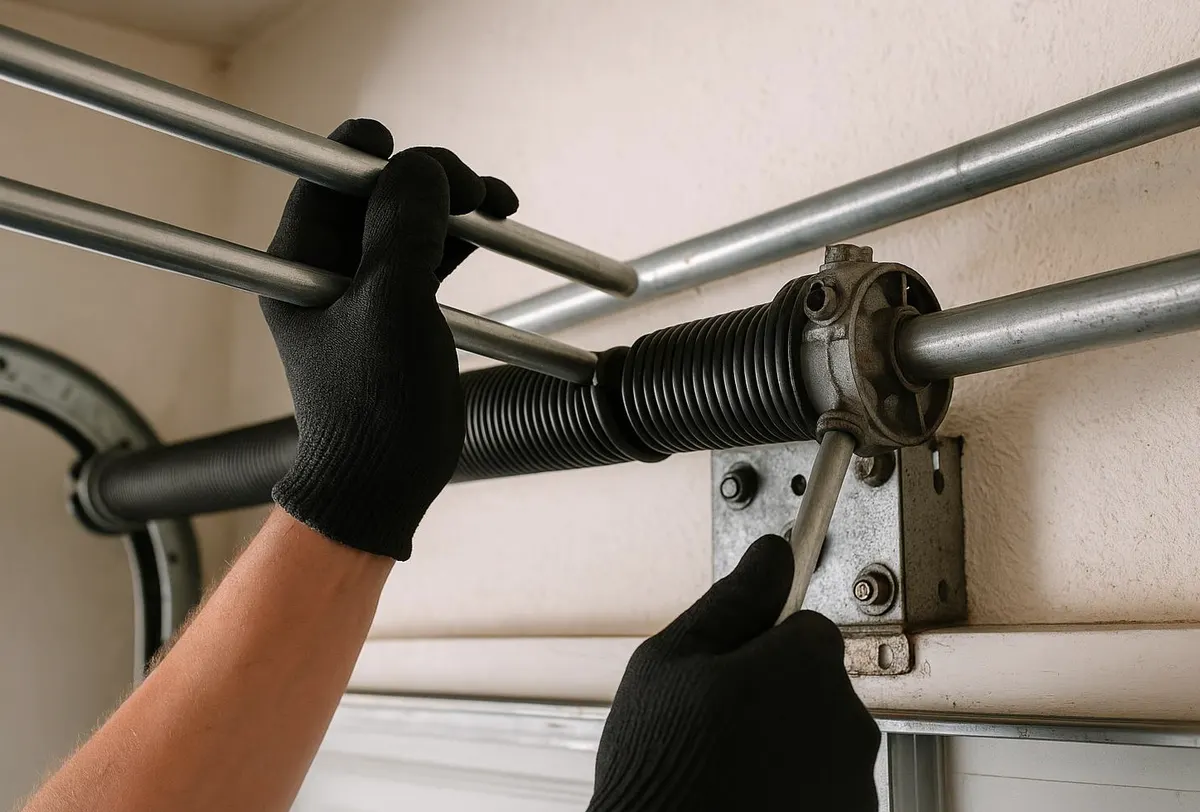
Metal contracts in the cold, and that changes how your torsion or extension springs behave. A spring that's been slowly losing tension all year can seem fine in September and then snap under the added strain of cold, stiff metal in December. If your door has felt heavier than usual, or the opener strains and makes a different sound lifting it, that's worth checking now rather than waiting for a full break during a January cold snap, which is exactly when these failures tend to happen.
Lubricant matters just as much. Summer-grade grease or old, gummed-up lubricant thickens in cold weather and makes the rollers, hinges, and springs work harder than they should. A light coat of garage-door-specific lubricant (not WD-40, which is a solvent and will actually strip protection) on the rollers, hinges, and springs goes a long way toward quieter, smoother operation once temps drop.
Weatherstripping and Seals
Summer humidity swells wood and rubber; winter cold shrinks and cracks it. Check the rubber seal along the bottom of the door and the weatherstripping around the frame. If you can see daylight around the edges, feel a draft, or notice the seal has gone stiff and brittle, replace it before the first snow. A failed seal doesn't just let in cold air — it lets in meltwater and road salt tracked in on tires, which accelerates rust on the bottom panel and the track.
Tracks and Rollers
This area sees a lot of salt and brine on the roads through winter, and it ends up on your garage floor and in your tracks courtesy of your car. That residue attracts moisture and speeds up corrosion on steel rollers and tracks. Wipe down the tracks before winter sets in, check for rust starting to form, and consider switching to nylon rollers if your current ones are old steel — they handle cold and moisture better and run quieter.
Test the Opener and Safety Features Now
Cold weather is tough on garage door openers, especially the photo-eye safety sensors near the bottom of the tracks. Road salt and winter grime can coat the sensor lenses, causing the door to reverse for no obvious reason, or refuse to close at all. Wipe the sensors clean and make sure they're properly aligned. While you're at it, test the auto-reverse safety feature by placing a block of wood in the door's path — it should stop and reverse immediately on contact.
If your opener runs on battery backup, check it now. Power outages tied to winter storms and ice are common here, and a dead backup battery means a dead garage door exactly when you need it most.
Do a Balance Check
Disconnect the opener (pull the release cord) and lift the door halfway by hand. A properly balanced door will stay in place. If it slides down or shoots up on its own, the springs are out of balance and compensating for it mechanically puts extra strain on the opener motor — exactly the kind of strain that causes failures in freezing temperatures. This isn't a DIY spring adjustment job; torsion springs are under serious tension and are genuinely dangerous to handle without the right tools.
When to Call Cuyahoga Falls Garage Door Pro
If your balance test fails, the door has been getting louder or heavier, or you're seeing rust starting on the tracks or hardware, it's worth getting ahead of it before winter weather turns a minor issue into a stuck or broken door during an ice storm. We handle spring replacement safely with the right tools, and our garage door maintenance service covers lubrication, hardware tightening, track cleaning, and a full safety and balance check — the exact things that keep a door running through a Summit County winter instead of failing on the coldest night of the year. If something does break after hours, our emergency garage door service covers that too.
Get your garage door checked out before the first freeze. Call Cuyahoga Falls Garage Door Pro today to schedule winter maintenance in Cuyahoga Falls, OH.